The religious history of mankind is one of the most fascinating sagas in all the annals of history. Yet strangely, it is also the most frustrating, because it is so full of contradictions and disappointments. One is almost driven to throw up his hands at all religion, and particularly at that springing from our Judeo-Christian heritage.
Just look for a moment at the story as it is told in the Bible, when man’s history begins as a religious story. God begins history by creating a wonderful world to be the stage where his God-like master production—man is to live his life in fellowship with his creator and his fellow man. However, what happens in this wonderful paradise is that before long, man begins to question God’s good intentions in creating him. He believes that God somehow or other cheated him, and withheld something from him. By disobeying God and showing his own strength in his ability to rebel, he would somehow or other achieve a sort of God-like quality. Man thus gains a new stature by being “in the know,” and acquires a sort of God-like omniscience and all knowingness —just like God.
Man didn’t acquire that knowledge by sinning. In fact, the thing he did find out was that he was really a disobedient rascal and now he believed God would get even with him, so he ran and hid in guilt and shame. Then, God comes down to commune with man in the garden as he was in the habit of doing. Man is nowhere to be found. He was so ashamed of himself that he went and hid from God —and did not respond to God’s call, “Adam where are you?” Finally, God finds him, and man explains that he had really discovered his nakedness and his shame before God, and really it was partly God’s fault, because God gave Eve to Adam, and she seduced man to sin. If eve had not been created, man would never have gotten into the mess he was in. (You know I know some men who feel like this today.) Now Eve was on the defensive, so she says, “Well it was all the serpent’s fault,” and God you created the serpent. Soon man is estranged from God driven out of his paradise.
The first thing you know man is alone, out in the wilderness trying to build a great tower up to heaven and trying to pick up the tangled strands of his life without God. If he could only get his tower off the ground, eventually its spire would reach into the very heavens of God, and as he was passing up God he could say, “Hi God! I made it without you. I have now achieved my Godlike character.”
Before long this experiment ends in disaster. Man really did not get along with his brother much better than he did with God. Suspicion, jealousy, dissension, hatred all took their toll. All you have is a confused and disconcerted man, who grows more wicked. His big tower stands as a ruin to mock God and literally to bug him.
God’s first reaction to call this evil in man and to turn on man with anger and destroy him with a flood. He spared only the one righteous family—the family of Noah. This did not seem to work. Before long the sons of Noah began to act wickedly. Then, God took a new approach to man’s dilemma. He looked around in the world and he found one man who was a man of faith and goodness among all the wicked people of the earth.
He decided to lead this man into a new land, and make of him a great people of God to live in the world as the great repository for the truth of God’s revelation. With this action, God could show the world what life could be like if man was willing to return to God and live in fellowship with him. Man would live as the family of God in harmony with his fellow men.
There was one requirement for this people of God—they must really trust God. There must be none of this monkey business like they had in the garden of Eden. Man cannot look at God and say—aha—he must have some ulterior motive in making me. What’s he got up his sleeve? He cannot say—aha—I know what it is—God is threatened by this wonderful creature he made. He is afraid we will get to know as much as he does. That is why he has withheld the tree of knowledge of good and evil.
Now man must implicitly trust God. So he says to Abraham. I want you to take your family—pack up your kit and kaboodle—and start of to a place you don’t know anything about. I will lead you to a land of promise where you are going to be the father of many nations.
Now, this was pretty wonderful, but there were some problems involved in this “blind faith.” In the first place, Abraham and Sarah had no children. Sarah was over seventy, and people that age do not have children. But God said: “Don’t worry about that, I’ll see to that.” When Sarah heard about that—she thought it was a great joke. Abraham didn’t think it was funny at all. In fact, he decided he better do something about it. So he raised a child by one of Sarah’s handmaidens.
Soon he found out, to his sorrow, that this was not the child of promise. God meant what he said that Sarah was to have a child and she did. Before long, God put Abraham to another test. The challenge came for him to take his child on a three day journey up on the mountain to sacrifice him to God—just like the heathen round about were doing with their sons to appease their God. This time Abraham showed more faith. When young Isaac looked around and said: “Dad, I’m confused. Here we are carrying the wood and the fire, but where is the sacrifice?” I am sure he suspected who the sacrifice would be. A few days earlier his buddy had made the same trip with his pagan father, and just yesterday the father returned alone. But Abraham said: “God will provide the sacrifice.” And he did. And we read: “Abraham believed God —and it was counted to him for Righteousness.”
Soon God’s own people came into existence—sons of this man of faith Abraham—with a great heritage of belief in God. Now this people of God were under one simple obligation: You obey my voice —and I will be your God and you will be my people. All you have to do is be like Abraham your father. Listen for my command obey it —and I will lead you constantly into your land of promise—as my people. You will be my great example to the world of what it will be like with them when they too become my people. You are to be the great witness to the life of faith in the world.
Now the strange thing is that again this witnessing community—this new people of God got in trouble. They seemed to constantly vacillate between two great and perilous roads of temptation. The first was to withdraw from the world in a sort of “better than you” attitude, withholding themselves from the very world to which they were to witness. They invented all kinds of laws—petty and picayunish many times—to stimulate this life of separatism. They prided themselves in parading their virtues before the world—these pseudo-virtues and said: “I thank God that I am not like you—look at me—I’m exclusive, I’m God’s pet—the apple of his eye.” They produced a ghetto religion.
The other temptation was just the opposite. They went out into the world and the marketplace and they became just like the heathen round about. In the time of the prophets, the people of God—the Hebrew people became just as greedy—just as lustful —just as crooked—just as cruel towards their brother as the heathen around them. There were times when they were no witness, because they lost their “saltness”—and when the salt lost its flavor —it was no good and was cast into the fire.
God tried various ways to purify that people. He gave them great religious leaders and a great Temple. They stoned the prophets desecrated their temple. Finally God used the wicked nations round about to punish them, and he took them into captivity to purify them through suffering. But this didn’t work either.
Finally God saw there was no other alternative to personal involvement on his part. He came down among his people and adopted completely the life of the servant, and carried that obedience to God right to death on the Cross. But he did something else. He gathered a band of disciples around him to learn from his lips and by osmosis from his life just what it was like to be a people of God. He demonstrated the power that would be available to them living by faith in God through miracles and mighty works —and ultimately through resurrection. He said to that Church—the kind of power that you see in my resurrection is available to you. This is what life can be like for God’s people—a people willing to trust God and follow him where he will lead.
For a while the church began to discover this kind of power in their lives. They were filled with this same spirit that raised Christ from the dead. This was the experience at Pentecost. Soon, they were preaching with the power that he preached—they even had more converts than he ever before. They began to duplicate his miracles—certainly they began to understand his words —and these words became the very bread of their life.
But then the old bugaboo haunted them again. They fell into the old trap of one of the two historic temptations. At times they became hermits or monastics and withdrew in self-righteousness from the world. Then it was that they devised all kinds of hard rules to live by to make themselves look good to the world. At other times they became worldly like the world around—and became greedy after gain, hungry after gold, selfish and self-centered and in their greed they withdrew from their brother for he became a threat to their security.
The cycle seemed to repeat itself over and over again. Once they were Puritan—and with stern morality they withdrew from the world. At other times, they became profligate and worldly—and the line of demarcation between the church and the world was erased. At such time, the world rushed in to gain respectability under the wings of the worldly Church.
It seems to me that is where we find ourselves today. Some of us can remember the rigid Puritanism of our childhood. There was a time not so long ago when it was a sin to whistle on Sunday. Now the pendulum has swung. The church has become as worldly as the world. What is there that the world enjoys that Christians do not enjoy?
I heard one of your young people say not too long ago—take any respectable person outside the church and put them along side of any respectable person inside the church and you can’t tell the difference. We have indeed become once more a worldly church.
Well, what is the answer? It seems to me it is that God is not calling us to be Puritans or Pharisees. Neither is he saying go out and live like the world—with only one philosophy—“eat, drink and be merry for tomorrow we die.”
God is calling us to something else. He is saying: “Come—take your families—follow me—I want to take you on this wonderful pilgrimage of faith—where you will be willing to go where I lead—asking no questions—trusting in me that the power of my resurrection is still available to you if you will make this pilgrimage.”
The requirements are not really complicated. Take time out each day to look for the pillar of fire and the cloud that will lead you. Ask me the direction for your life each day. Take time to listen. Then, be willing to pay the price of obedience. Do not get sidetracked by the lust for things or the lust for power or the lust of pride Be willing to put me first—seek my kingdom—use my word as your chart—watch the fine, sensitive needle of the compass of the holy spirit.
While on vacation, I bought a compass to guide my boat in any fog I might encounter out in the ocean. I was amazed how sensitive the needle is on one of those pesky little things. You had to get it setting just right—and give it time for the needle to settle—then sure enough it would be a safe guide—provided you knew one other thing —you had to know the lay of the land.
That is what God is asking you and me to do. In the Bible, we have the road charted. Here you get the lay of the land. You learn from the experience of the people of God where the shoals and rough places are. You learn to benefit the beacon lights of sacred history.
In prayer, you sensitize your life to the holy spirit—you take time in quietness in your closed room—to put the organism is a state of serenity and peace —so that the needle of the compass of the spirit can settle and you are sure of your direction. Then, you are ready to give your ship of life the throttle—like Abraham of old and like Christ—you give your little ship of life the full throttle and sail out into the sea of life and ultimately come to the harbor of God —where we can say the journey of my life has been worthwhile. I have fought the good fight. I have finished my course. I have kept the faith—henceforth there is laid up for me a crown of righteousness, which the Lord the righteousness judge will give me at that day.
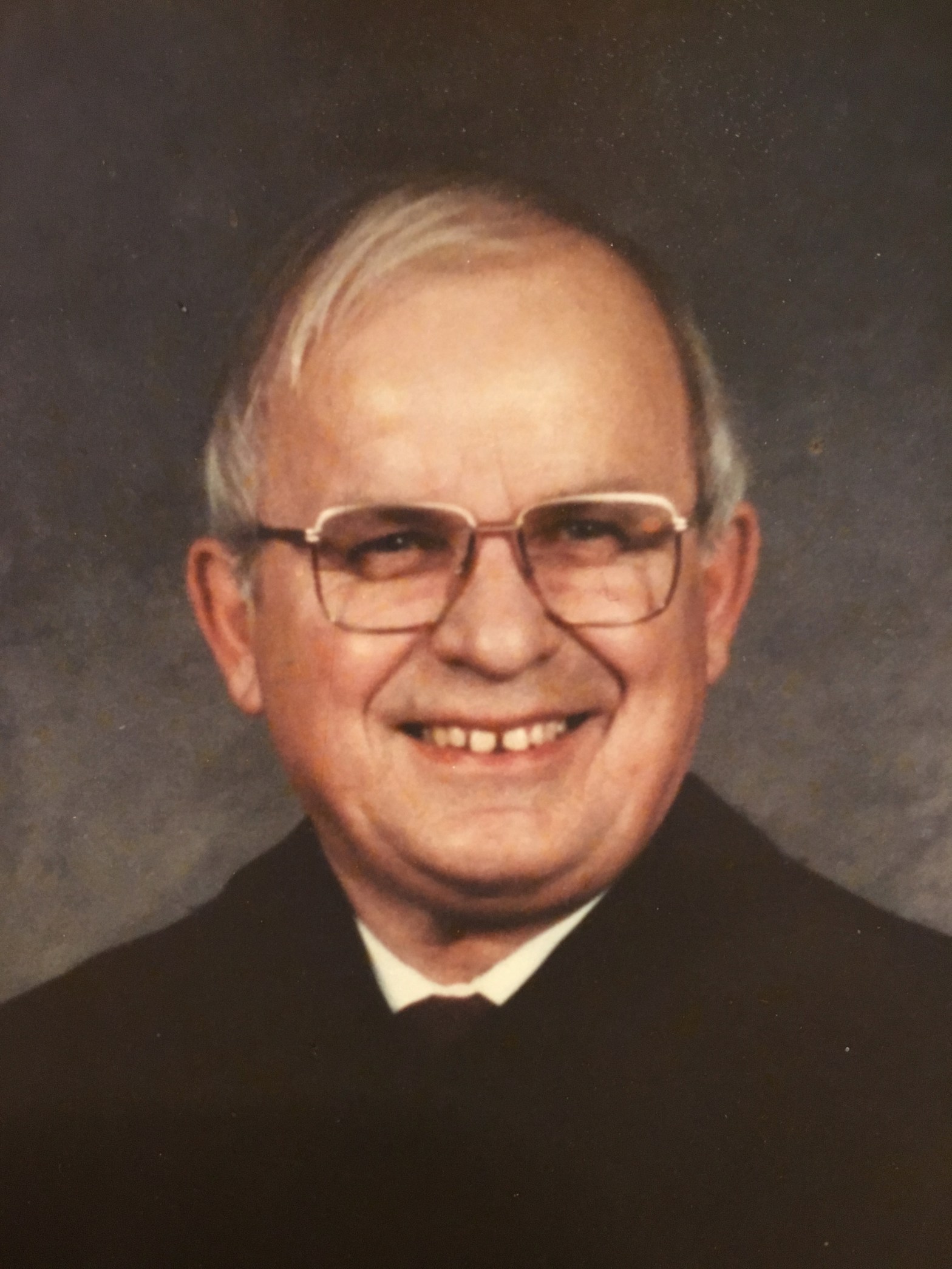
 Reverend Arthur Schwabe Blog